3 Audiences · NM

AI in Healthcare

A research and facilitation initiative exploring how students, clinicians, and administrators across Northwestern Medicine understand, adopt, and relate to AI in healthcare contexts.

Role
AI Researcher
& Facilitator
Institution
Northwestern
Medicine
Audiences
Students, Clinical
Staff, Admin
Format
Workshops, Research,
Tool Design

Project Brief

AI is being deployed across healthcare at every level, in clinical decision support, administrative workflows, patient communication, and research infrastructure. But the people working inside health systems experience that deployment very differently depending on where they sit. A high school student in a research pipeline, a clinician making diagnostic decisions, and an administrator managing operational workflows each bring fundamentally different relationships to AI: different fears, different fluencies, different stakes.

This initiative worked across all three. The through-line was not the technology. It was the question: what does it mean for AI to actually serve the people inside a health system, rather than simply being deployed at them?

The Three Audiences

NM Scholars

Students entering medicine and clinical research for the first time. For this audience the challenge was not AI adoption. It was research literacy. ResearchBridge was designed specifically for this population, scaffolding the full research lifecycle with AI support that augmented student thinking rather than bypassing it.


Clinical Staff

Clinicians navigating AI tools entering their workflows: diagnostic support, documentation assistance, ambient AI in patient encounters. For this audience the challenge was critical fluency. Helping practitioners ask better questions about AI tools rather than simply adopting or rejecting them. Workshops focused on what AI can and cannot see, where its outputs should be trusted and where they should be interrogated, and how clinical judgment relates to algorithmic recommendation.

Administrative Staff

Administrators managing operational workflows increasingly mediated by AI: scheduling, documentation, resource allocation. For this audience the challenge was practical fluency combined with appropriate skepticism. Workshops focused on understanding what AI tools actually do versus what they claim to do, and how to evaluate new tools before committing to them organizationally.

Findings

Each audience experienced a version of the same underlying problem: AI was arriving in their context faster than the frameworks for evaluating it. Students didn’t have the research vocabulary to interrogate AI-generated summaries. Clinicians didn’t have the mechanistic vocabulary to understand when AI diagnostic tools might fail their specific patient populations. Administrators didn’t have the evaluation vocabulary to compare AI tools across vendors.

The facilitation and research work across all three audiences was designed to build that vocabulary: specific to each context, grounded in the actual workflows people were already navigating, and honest about what AI does and does not do well in healthcare settings.

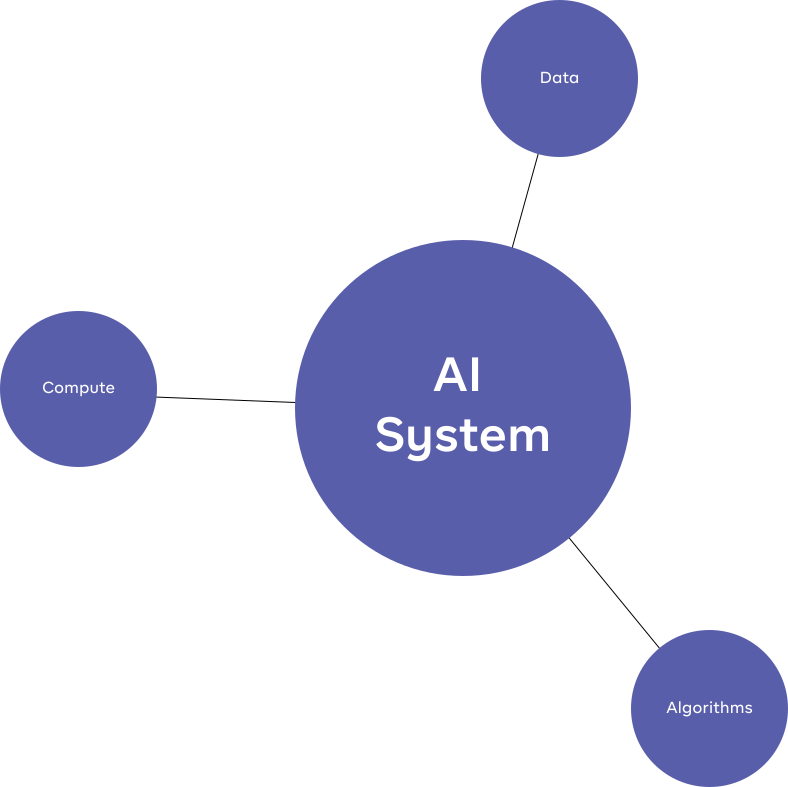
The AI triad: a common and simple way to understand AI systems, but void of context and human-centered understanding.

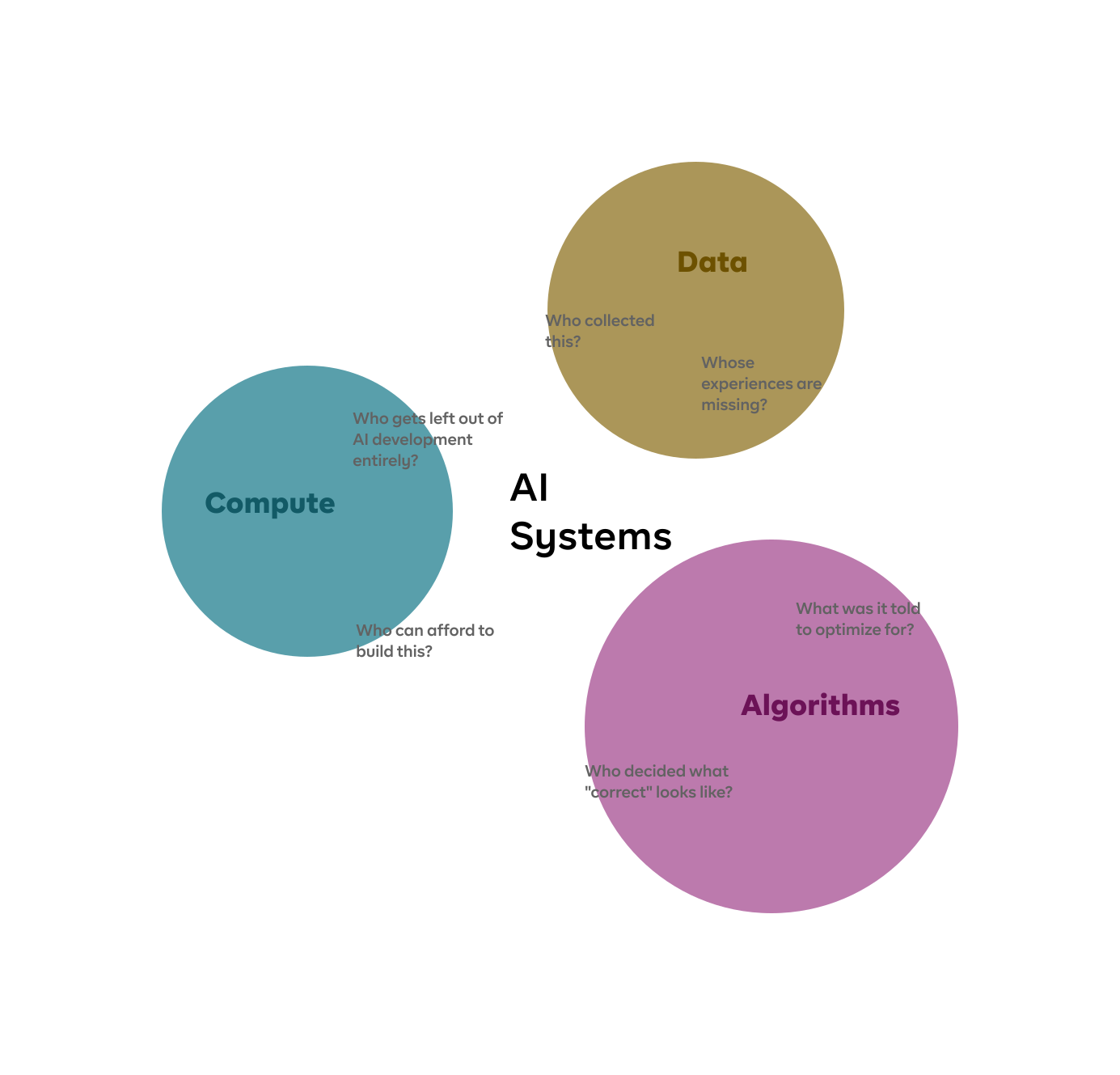
A diagram showing the non-binary nature of these systems, with people at the core informing these experiences.

Key Themes Across All Three

AI literacy is not one thing

What fluency means for a high school researcher is completely different from what it means for a cardiologist or a scheduling coordinator. One-size-fits-all AI education fails all three.

The stakes are not abstract

In healthcare contexts, AI failures have consequences for real patients. That stakes framing was present in every session regardless of audience.

Adoption is not the goal

The goal was critical engagement. Participants who left more skeptical but more informed were a better outcome than participants who left enthusiastic but uncritical.

Who the system was built for matters

Across all three audiences, the question of whose data trained the AI, whose workflows it was optimized for, and whose patient population it had been validated on surfaced consistently as the most important question practitioners weren’t asking.

Impact

  • 3 distinct audiences served students, clinical staff, administrative staff
  • Northwestern Medicine one institution, multiple points of entry
  • Research and facilitation combined not just workshops, but ongoing study of how AI literacy develops across healthcare roles
  • ResearchBridge the product that emerged from the student-facing work